
Foundations That Control Temperature Year-Round
Basement Insulation in Albany for properties experiencing moisture issues, cold floors above, and inconsistent indoor climates
Basement walls and rim joists conduct significant heat loss during winter while allowing humid outdoor air to enter during summer, creating conditions where the foundation space stays damp and cold regardless of how much the heating system runs. Challacombe Spray Foam installs basement insulation systems across Albany that address both thermal bridging through concrete and air leakage at the band joist, which together account for much of the energy waste in homes with below-grade spaces. The service applies to finished basements used as living areas and unfinished basements where temperature control still affects comfort on the floor above.
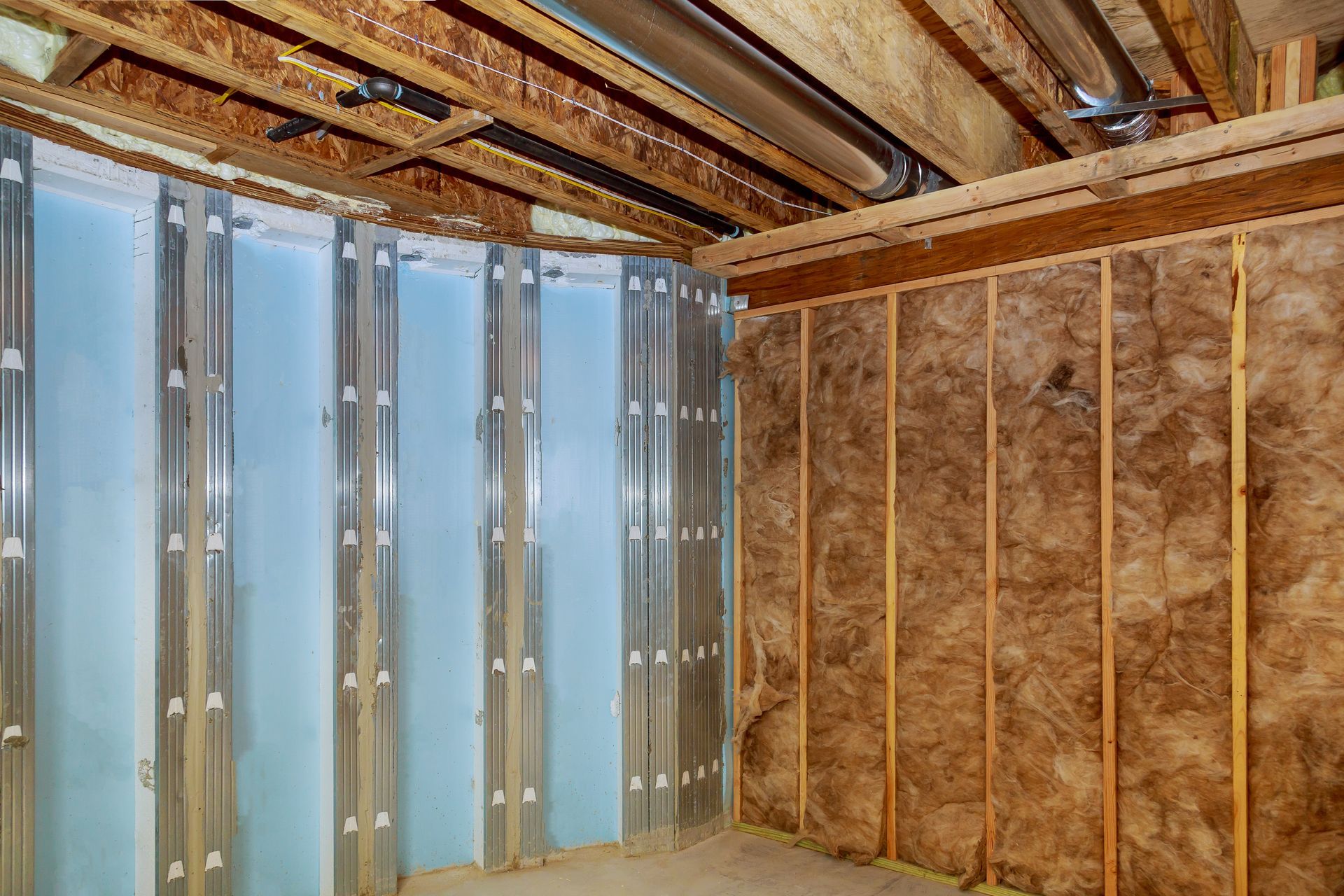
Insulating basement assemblies means applying closed-cell spray foam to the interior foundation walls and rim joists to create a continuous air barrier that stops convective currents and moisture infiltration. Finished basements may use rigid foam board or spray foam behind framed walls, while unvented basement designs condition the entire space rather than isolating it from the rest of the building envelope.
Request a basement insulation estimate to assess current moisture patterns and thermal performance throughout your foundation assembly.
How Basement Insulation Addresses Foundation Heat Loss
Installation begins with preparing foundation surfaces, ensuring they are dry and free of active water intrusion, then applying insulation to cover the full height of the foundation wall and seal the rim joist where floor framing meets the top of the foundation. Spray foam expands into gaps and irregularities that other materials cannot reach, eliminating the air pathways where cold drafts originate and where humid air condenses during temperature swings.
Once the insulation is in place, floors above the basement feel noticeably warmer during winter months, humidity levels stabilize because outdoor air no longer freely enters through foundation gaps, and musty odors diminish as moisture-related condensation decreases throughout the space. Heating systems maintain target temperatures with shorter run cycles, and the basement itself becomes usable year-round without feeling damp or uncomfortably cold.
The process includes addressing thermal breaks at the sill plate, ensuring proper coverage at pipe penetrations, and coordinating with any existing HVAC or plumbing systems that run along foundation walls. Basement insulation does not resolve active foundation cracks, bulk water intrusion through walls or floors, or structural settling that requires separate remediation before insulation work proceeds.
Answers to Frequent Service Questions
Property owners ask these questions when planning basement insulation projects, particularly regarding moisture management and the differences between insulation types.
What insulation material works best for basement walls that occasionally show dampness?
Closed-cell spray foam resists moisture absorption and acts as a vapor barrier, making it effective for foundation walls where concrete naturally transmits moisture from surrounding soil.
How does basement insulation improve comfort on the first floor?
By stopping cold air infiltration and thermal transfer through the foundation, the floor system above the basement no longer acts as a heat sink, which eliminates cold spots and reduces the temperature difference between floors.
When should basement insulation be installed during renovations?
Insulation should go in before interior framing, drywall, or finish work begins, since access to bare foundation walls and rim joists becomes restricted once framing is in place.
What role does the rim joist play in basement heat loss?
The rim joist represents one of the largest air leakage sites in the entire building envelope, where exterior air freely enters through gaps between framing members and the top of the foundation, causing drafts and significant heat loss.
How do Albany's seasonal humidity swings affect basement insulation choices?
Summer humidity in the region drives moisture into cool basement spaces, so insulation must prevent warm outdoor air from contacting cold foundation surfaces where condensation forms and supports mold growth.
Challacombe Spray Foam tailors basement insulation approaches based on whether the space is finished or unfinished, current moisture conditions, and how the foundation integrates with the rest of the building's thermal envelope. Arrange a foundation evaluation to determine the most effective insulation strategy for your below-grade spaces.