
Sound Control and Gap Filling in One Material
Open Cell Spray Foam Insulation in Albany for interior spaces affected by noise transmission and thermal inefficiency
Open cell spray foam expands up to one hundred times its liquid volume, filling irregular cavities, tight corners, and gaps around framing members that remain inaccessible with batt or loose-fill products. This expansion characteristic makes the material effective in wall assemblies where wiring, plumbing, or blocking creates obstructions that leave voids in traditional insulation. Challacombe Spray Foam installs open cell formulations in residential remodels, new construction projects, and additions throughout Albany where both thermal performance and acoustic control matter to homeowners seeking a quieter, more comfortable indoor environment.
The foam's lower density allows it to absorb sound energy passing through interior partitions, which reduces noise transfer between bedrooms, home offices, bathrooms, and living areas. This quality becomes particularly noticeable in shared walls, floors below active spaces, and ceilings beneath mechanical equipment or foot traffic.
Request an insulation consultation to evaluate which spaces in your home would benefit from open cell application.
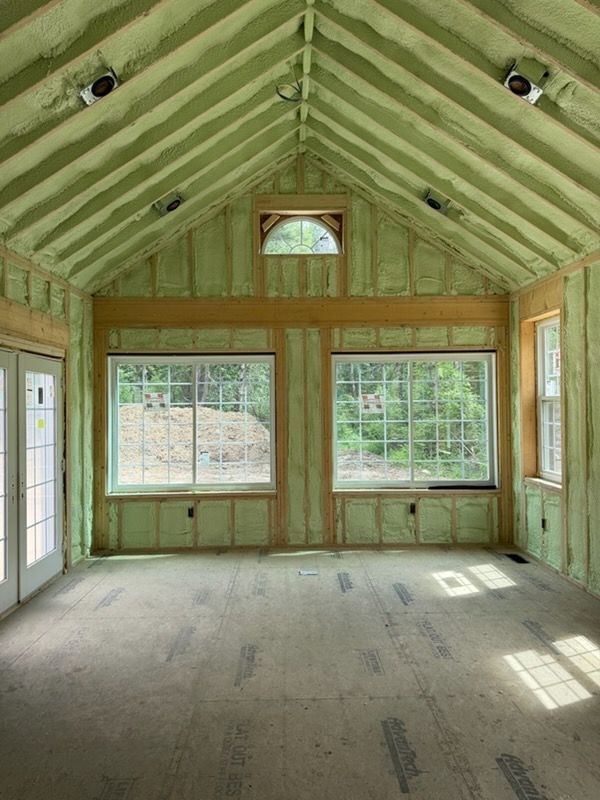
Why Open Cell Foam Works for Interior Applications
Open cell spray foam is applied in passes that allow the material to expand fully before additional layers are added, preventing over-packing that can warp framing or create uneven surfaces behind drywall. The foam cures soft enough to trim flush with studs, ensuring drywall installation proceeds without interference. Because open cell remains vapor-permeable, it allows moisture to diffuse through wall assemblies rather than trapping it, which makes the product suitable for interior partitions where vapor drive occurs from both sides depending on seasonal conditions.
After installation, rooms feel quieter during everyday activities—conversations, television audio, and plumbing noise become less audible through walls and ceilings. Temperature consistency improves across floors as the foam fills gaps around rim joists, top plates, and partition intersections where air movement previously created cold spots. The insulation remains flexible enough to accommodate minor building movement without cracking or separating from framing, maintaining its seal and acoustic properties over time.
Open cell works well in attic floor assemblies where ventilation occurs above the insulation plane, in bonus rooms over garages where temperature swings affect comfort, and in finished basements where sound isolation between living levels improves livability. The material does not provide structural rigidity or moisture blocking, so applications requiring those characteristics call for closed-cell formulations instead.
What Property Owners Usually Ask
Installation details and material selection depend on the specific performance goals for each space.
What makes open cell effective for sound reduction?
The foam's cellular structure absorbs sound waves rather than reflecting them, which reduces transmission through walls and ceilings more effectively than fiberglass batts that allow sound to pass through air gaps and seams.
How much does open cell spray foam expand during application?
Open cell formulations expand approximately one hundred times their applied volume, which allows the material to fill small cracks, irregular cavities, and spaces around obstacles that would remain uninsulated with pre-formed products.
Why is open cell preferred for interior walls over closed cell?
Open cell's lower density and cost make it practical for interior partitions where high R-value and moisture resistance are not required, while still delivering effective thermal and acoustic performance.
When should open cell be avoided in favor of closed cell?
Exterior walls in Albany climates, below-grade applications, and spaces exposed to moisture require closed cell's vapor barrier and higher insulating value to prevent condensation and deliver adequate thermal resistance.
What preparation is needed before spray foam installation?
Electrical wiring, HVAC ducts, and plumbing must be completed and inspected, and spaces must be cleared of debris to allow proper adhesion and full expansion of the foam during application.
Challacombe Spray Foam assesses framing details, existing insulation conditions, and project goals to determine where open cell delivers the best combination of thermal control and sound dampening. Schedule a project assessment to review insulation options for your remodel or new construction.