
Affordable Thermal Control for Standard Construction
Fiberglass Insulation in Bennington for new builds and attic upgrades requiring cost-effective heat transfer reduction
Fiberglass insulation controls heat transfer in residential and commercial buildings by trapping air within fine glass fibers, slowing conduction through walls, ceilings, and floor assemblies. The material's availability in batt and blown forms makes it adaptable to framed cavities in new construction, attic floor installations over conditioned spaces, and wall assemblies where standard stud spacing allows pre-cut sizing. Challacombe Spray Foam installs fiberglass in projects throughout Bennington where budget constraints, building code compliance, and straightforward thermal performance requirements align with the material's characteristics and installation methods.
Fiberglass works effectively when installed without compression, gaps, or voids that allow air circulation within the insulation layer. Proper fit around electrical boxes, plumbing penetrations, and framing members determines whether the material performs at its rated R-value or underperforms due to thermal bypasses.
Request a quote to determine fiberglass specifications suited to your building's framing and energy targets.
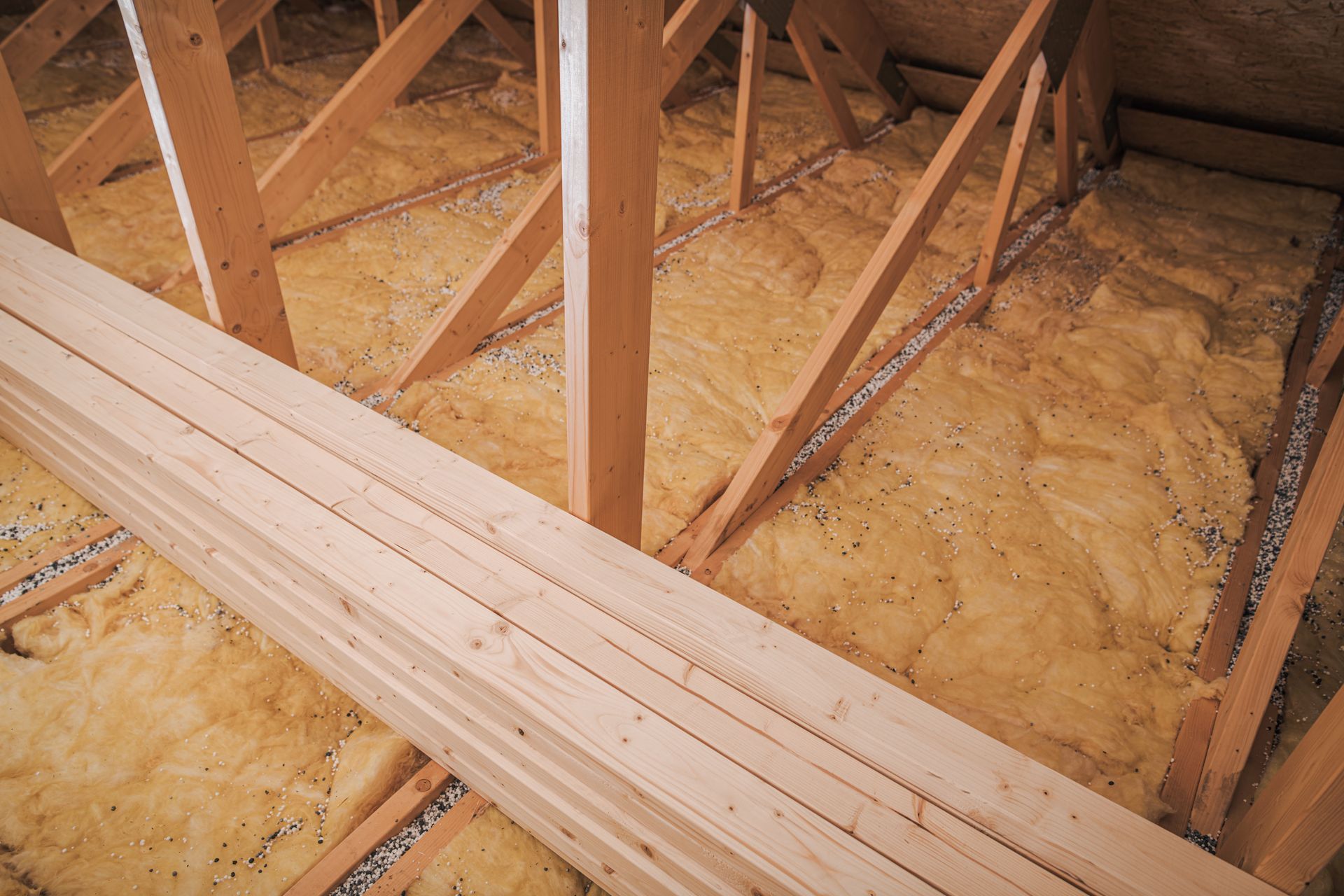
How Fiberglass Insulation Addresses Heat Movement
Installation involves cutting batts to fit snugly between framing members without compressing the material, which would reduce its thickness and lower its insulating value. In attics, blown fiberglass is distributed evenly across ceiling joists to achieve target depth, with care taken to maintain clearances around recessed lights, vents, and other heat-producing fixtures. Vapor retarders are added on the warm-in-winter side of assemblies when required by code to limit moisture diffusion into the insulation layer during heating seasons.
Buildings insulated with fiberglass see reduced temperature swings between conditioned spaces and unconditioned areas like attics or crawl spaces, which lowers heating and cooling costs compared to uninsulated assemblies. Rooms maintain more consistent temperatures, and HVAC systems reach setpoints faster because less energy is lost through the building envelope. Fiberglass does not settle significantly when properly installed, though performance depends on maintaining the integrity of the installation—compressed areas, gaps, or displaced batts reduce effectiveness and create cold spots.
Fiberglass is specified in projects where framing is regular and accessible, where air sealing will be addressed separately through caulking and weatherstripping, and where cost per square foot is a primary decision factor. The material does not provide air sealing, so buildings relying solely on fiberglass without additional envelope details may still experience drafts and infiltration-related energy loss.
What Homeowners Typically Want to Know
Fiberglass selection and installation quality affect long-term thermal performance and comfort outcomes.
What R-value should fiberglass insulation provide in Bennington homes?
Attics typically require R-38 to R-60 depending on heating fuel and code requirements, while walls are insulated to R-13 or R-15 based on stud depth and energy efficiency goals.
How does installation quality affect fiberglass performance?
Gaps around batts, compression from oversized pieces, and voids near obstructions create thermal bypasses that allow heat to escape, reducing the effective R-value well below the product's rated performance.
Why is fiberglass often chosen for new construction projects?
The material's low cost, ease of installation in standard framing, and widespread availability make it practical for builders working within budget constraints while meeting minimum code requirements.
When should fiberglass be upgraded or supplemented in existing buildings?
If attic insulation has compressed below six inches, or if walls were never insulated during original construction, adding fiberglass or denser alternatives improves thermal resistance and reduces energy costs.
What limitations should homeowners understand before choosing fiberglass?
The material does not seal air leaks, does not block moisture, and can lose effectiveness if it gets wet, so successful installations require separate attention to air sealing and moisture control strategies.
Challacombe Spray Foam provides customized insulation recommendations based on building type, framing details, and performance expectations. Arrange a consultation to review whether fiberglass meets your project's thermal, acoustic, and budget requirements.