
Structural Strength and Moisture Resistance Combined
Closed Cell Spray Foam Insulation in Saratoga Springs for basements and exterior walls exposed to harsh seasonal weather
Basement walls in the Northeast often face hydrostatic pressure, temperature differentials, and humidity infiltration that lead to condensation, mold growth, and insulation failure when vapor-permeable products are used below grade. Challacombe Spray Foam applies closed cell spray foam insulation that blocks moisture migration while delivering an R-value above six per inch, making it effective in crawl spaces, rim joist assemblies, and exterior wall cavities where thermal performance and water resistance are both critical. The rigid cellular structure also adds racking strength to framed walls, which can improve building resilience during high winds or settling.
Closed cell foam cures into a dense, impermeable barrier that prevents water vapor from passing through the insulation layer. This characteristic protects wood framing from moisture accumulation that causes rot, and it eliminates the cold surface condensation that occurs when warm indoor air contacts cool foundation walls during winter months in Saratoga Springs and surrounding communities.
Request a project estimate to identify where closed cell insulation can address moisture risks and energy loss in your building.
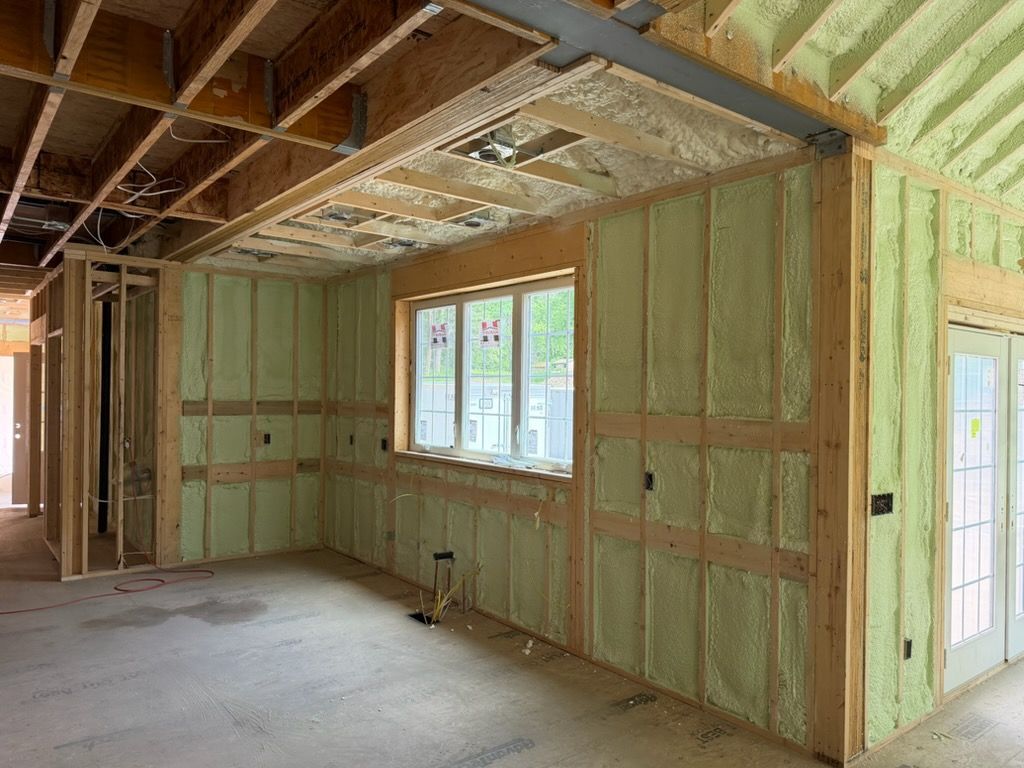
What Proper Closed Cell Installation Requires
Challacombe Spray Foam applies closed cell in controlled thickness passes to manage exothermic heat generated during the curing process, preventing damage to building materials and ensuring uniform density throughout the application. Surface preparation includes cleaning masonry or concrete to remove dust, efflorescence, and contaminants that would prevent adhesion. The foam bonds directly to foundation walls, sill plates, and sheathing, creating a continuous insulation layer without seams or fastener penetrations that compromise thermal performance.
After curing, closed cell foam creates a rigid surface that resists compression, maintains its R-value under temperature fluctuations, and blocks air infiltration through foundation cracks or gaps around utilities. Basements stay warmer during winter without the cold drafts common near sill plates, and crawl spaces remain dry because the vapor barrier prevents ground moisture from entering conditioned spaces. The insulation does not sag, settle, or absorb water, which means performance remains consistent for the life of the building without requiring replacement or maintenance.
Closed cell is specified for exterior walls in commercial buildings where space constraints limit insulation thickness but high R-values are required, in roof assemblies where condensation control is critical, and in flood-prone areas where water contact may occur. The material's higher cost per board foot is offset by its superior performance in demanding applications where moisture exposure or extreme temperature swings occur.
Common Questions About This Service
Material selection and application details vary based on building conditions and project requirements.
What R-value does closed cell spray foam provide?
Closed cell delivers an R-value above six per inch of thickness, allowing you to meet energy code requirements in exterior walls with less cavity depth than fiberglass or open cell products require.
How does closed cell foam prevent moisture problems in basements?
The foam's impermeable structure blocks water vapor from passing through foundation walls, preventing condensation on cool surfaces and eliminating the moisture source that leads to mold growth and wood decay in rim joists.
Why does closed cell add structural rigidity to buildings?
The foam cures into a dense, rigid material that bonds to framing members and sheathing, effectively laminating wall and roof assemblies to increase racking resistance and reduce flexing under load.
When is closed cell preferred over open cell in Saratoga Springs projects?
Below-grade applications, exterior walls in heating climates, and spaces requiring vapor control demand closed cell's moisture resistance and higher insulating value to prevent condensation and meet thermal performance targets.
What building types benefit most from closed cell insulation?
Commercial structures, pole barns, metal buildings, and homes with unvented attic assemblies gain the most from closed cell's combined air sealing, moisture control, and high R-value in limited cavity space.
Challacombe Spray Foam evaluates wall assemblies, moisture risks, and thermal goals before specifying closed cell thickness and application methods. Arrange an on-site consultation to review insulation strategies for your basement, crawl space, or commercial building project.