
Recycled Material Performance for Existing Homes
Cellulose Insulation in Pittsfield for retrofit applications in older homes with under-insulated wall cavities and attics
Older homes throughout Pittsfield often contain minimal or deteriorated insulation in wall cavities, leaving gaps where heat escapes during winter and enters during summer. Cellulose insulation, manufactured from recycled paper products treated with fire retardants, fills these voids through dense-pack or blow-in methods that conform to irregular framing, settle around wiring and plumbing, and reach spaces inaccessible with batt products. Challacombe Spray Foam installs cellulose in attic floors, enclosed wall cavities, and knee wall assemblies where improving thermal resistance without major demolition preserves the structure while reducing energy consumption and improving year-round comfort.
The material's fibrous structure slows air movement through building assemblies and reduces convective heat transfer, which lowers the workload on heating systems during cold months common across the region. Cellulose also absorbs and releases moisture vapor without losing insulating value, allowing it to function in assemblies where vapor diffusion occurs naturally.
Schedule an insulation assessment to determine where cellulose can address heat loss in your existing home.
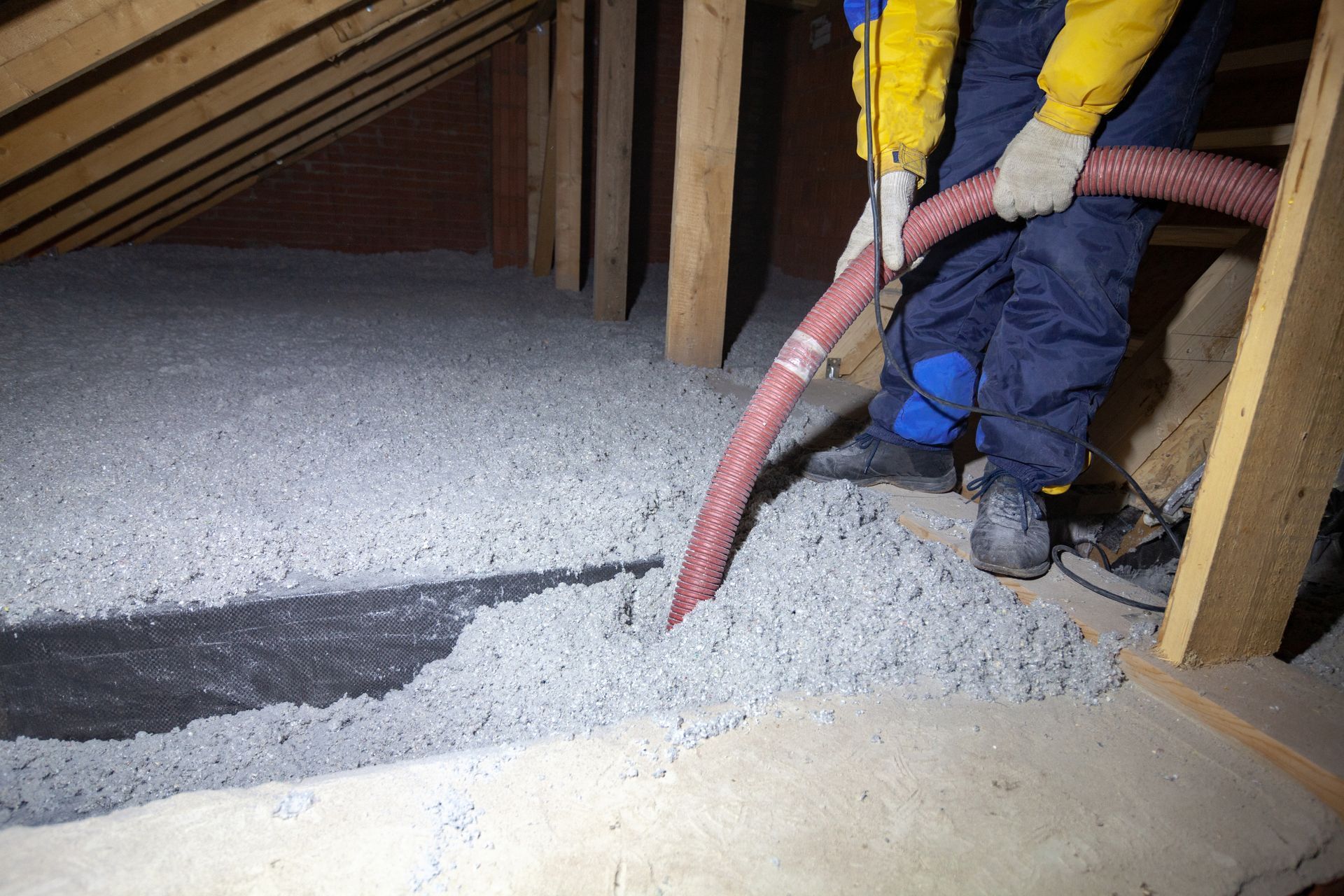
What Changes After Cellulose Is Installed
Cellulose installation involves blowing or dense-packing material into cavities through access holes drilled in wall sheathing or interior finishes, then sealing openings after achieving target density. In attics, the insulation is applied over existing materials or directly onto ceiling joists, building depth to meet current energy code R-value recommendations. Proper density prevents settling and ensures the material maintains contact with all cavity surfaces, eliminating voids where air movement would reduce thermal performance.
Rooms feel more stable in temperature after installation—walls no longer radiate cold during winter nights, and upper floors remain cooler during summer afternoons. Furnaces and air conditioners run shorter cycles because the building envelope retains conditioned air more effectively, and drafts near outlets or baseboards diminish as the insulation fills gaps around electrical boxes and framing intersections. Cellulose maintains its position and effectiveness for decades when installed at correct density, and the material's environmentally conscious composition appeals to homeowners prioritizing recycled content and reduced embodied energy.
Cellulose works well in retrofit scenarios where wall cavities cannot be accessed from the interior, in attics requiring additional R-value over existing insulation, and in additions where budget constraints make spray foam impractical. The material does not provide air sealing equivalent to foam, so pairing cellulose with separate air barrier details or sealing major leaks before installation maximizes performance.
Questions Before Starting Your Project
Retrofit insulation decisions depend on existing building conditions and access limitations in older homes.
What makes cellulose suitable for older Pittsfield homes?
The material's ability to be blown into enclosed cavities without removing interior finishes allows insulation upgrades in plaster-walled homes where demolition would be costly and disruptive.
How is cellulose density controlled during installation?
Installers monitor pressure and flow rates during blowing to achieve target density, typically three to four pounds per cubic foot in wall cavities, which prevents settling while ensuring complete fill around obstructions.
Why does cellulose reduce heat transfer better than minimal existing insulation?
Adding cellulose increases the R-value of wall and attic assemblies from near-zero in uninsulated cavities to R-13 or higher in walls and R-40 or more in attics, significantly slowing conductive and convective heat loss.
When should attic cellulose be added over existing insulation?
If current attic insulation measures less than ten inches or has compressed over time, adding cellulose restores thermal resistance and brings the assembly closer to modern energy efficiency standards.
What preparation is required before cellulose installation in walls?
Access holes are drilled between studs, typically from the exterior, and cavities are inspected for obstructions or moisture issues that could interfere with insulation performance or indicate underlying problems.
Challacombe Spray Foam evaluates wall construction, attic conditions, and access points to determine the most effective cellulose application method for your retrofit project. Request a detailed evaluation to identify insulation opportunities that fit your home's construction and performance goals.